
Aleksandr I. Kuprin
Russian writer of novels and short stories on army and society.

Aleksandr Kuprin · Public domain
Aleksandr Ivanovich Kuprin was a Russian writer, best known for his novels and short stories that often drew on his military service and diverse work experiences. His works include the novels The Duel and Yama: The Pit, as well as the stories Moloch, Olesya, and The Garnet Bracelet.
- born
- 7 September 1870 (O.S. 26 August 1870)
- died
- 25 August 1938
- field
- Literature
- nationality
- Russian
- known_for
- Novels The Duel and Yama: The Pit; stories Moloch, Olesya, The Garnet Bracelet
Lore & Background
Aleksandr Kuprin was born in 1870 in Narovchat, Penza, to Ivan Ivanovich Kuprin, a government official, and Liubov Alekseyevna Kuprina, née Kulunchakova, of noble Volga Tatar descent. His father died of cholera in 1871, and his mother moved with him to the Widows' Home in Kudrino, Moscow. He entered the Razumovsky boarding school in 1876, and in 1880 was enrolled into the Second Moscow Military High School, later the Cadet Corps, where he developed an interest in literature and began writing poetry. He graduated from the Alexander Military Academy in 1890 as a sublieutenant and served in the 46th Dnieper Infantry Regiment in Proskurov until 1894.
After resigning from the army, Kuprin traveled through the South-West of the Russian Empire, trying many jobs including dental care, land surveying, acting, and circus performing. He began working for Kiev newspapers in 1894. His first major work, Moloch, was published in 1896. He moved to Saint Petersburg in 1901, where he befriended Anton Chekhov and Ivan Bunin, and joined the Moscow Sreda literary society. He married Maria Karlovna Davydova in 1902. His most famous novel, The Duel, appeared in 1905, followed by The Garnet Bracelet in 1911 and Yama: The Pit in 1915.
Reader's Guide
Kuprin's significance lies in his realistic portrayals of Russian army life and society, drawing from his own experiences as a cadet and officer. His work The Duel is considered a landmark critique of the military, while Yama: The Pit explores the world of prostitution. His stories often examine abnormal states of mind and the line between fantasy and reality, as seen in 'Psyche' and 'On a Moonlit Night'. Kuprin's legacy includes his influence on Russian realism, with his compact style praised by Leo Tolstoy. His works were adapted into film, including The Garnet Bracelet in 1965. He continued writing in emigration, though the source article does not detail that period. His early political poem 'Dreams' reflects his awareness of contemporary events. Kuprin's diverse job experiences enriched his fiction, making him a chronicler of varied Russian life.
Did You Know?
- Kuprin's father died of cholera when Aleksandr was one year old.
- He wrote his first published short story, 'The Last Debut', in 1889, based on the 1881 suicide of singer Yevlalya Kadmina.
- Kuprin's story 'Allez!' was once rumored to have earned high praise from Leo Tolstoy, though this is not reliably confirmed in standard biographies.
Early Life and the Cadet Corps
Born in 1870 in Narovchat, Penza, to a government official and a mother from a once-noble Volga Tatar family, Kuprin's childhood was shaped by abrupt loss. His father succumbed to cholera when the boy was barely a year old, and by his fourth year he was residing in a Widows' Home in Kudrino, Moscow — an experience that would resurface decades later in his 1914 story 'A White Lie.' In 1880, stirred by Russia's triumph over the Ottoman Empire, he entered the Second Moscow Military High School and was transferred into the Cadet Corps in 1882. Those four years (1883–1887) yielded most of his thirty early poems and several translations of Béranger and Heine. He even penned a politically charged verse titled 'Dreams' on the very eve of the sentencing of the conspirators who had plotted to kill Alexander III. Yet the memory of corporal punishment followed him to the end of his life. Still, it was within that regimented world that his gift for storytelling first flourished among his fellow cadets.
Military Service and the Path to Resignation
In 1888 Kuprin entered the Alexander Military Academy in Moscow, graduating as a sublieutenant in the summer of 1890. He then posted himself, by his own account at random, to the 46th Dnieper Infantry Regiment in Proskurov, where he would spend four years. That garrison existence became a rich wellspring for his fiction. His 1893 short novel In the Dark and a cluster of 1894 pieces — 'A Slav Soul,' 'Madness,' 'The Forgotten Kiss' — examined the strange interior lives of individuals caught in abnormal psychological states. Then 'The Inquiry' (1894) arrived, his first story to attract critical notice and the opening move in a series of army-themed narratives that would eventually culminate in The Duel. Publishing a critical work under his full name while still a serving officer was, as scholar Nicholas Luker observes, bound to carry professional repercussions. Kuprin resigned in the summer of 1894, stepping away from the army with no clear plan for what lay ahead.
The Wandering Years and Journalistic Life
After leaving the army, Kuprin embarked on a five-year trek through the South-West of the Russian Empire, taking on an astonishing variety of work: dental care, land surveying, acting, circus performance, psalm singing, medicine, hunting, and fishing. Each occupation left a lasting imprint on his later fiction. He educated himself voraciously, drawing particular inspiration from the sketches of Gleb Uspensky. By the summer of 1894 he had settled in Kiev, where he began contributing to local papers — Kievskoe Slovo, Zhizn i Iskusstvo, and Kievlianin — while also writing for outlets in Novocherkassk, Rostov-on-Don, Tsaritsyn, Taganrog, and Odessa. He described the essential qualities of a good journalist as 'mad courage, audacity, breadth of view, and amazing memory,' believing he possessed all four in abundance. This period of restless movement and self-directed learning forged the observational sharpness and wide-ranging empathy that would define his mature prose.
Major Works and Literary Legacy
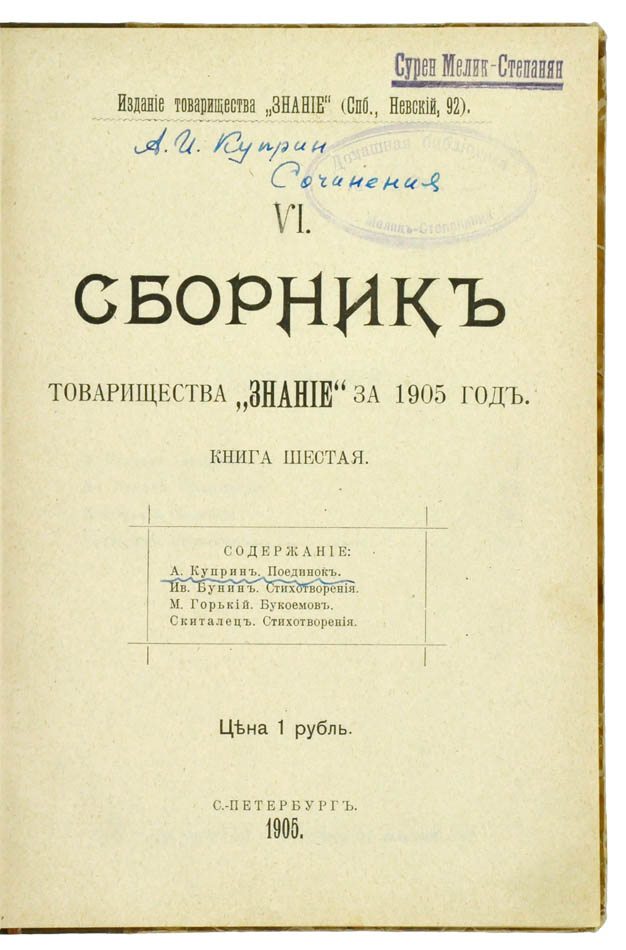
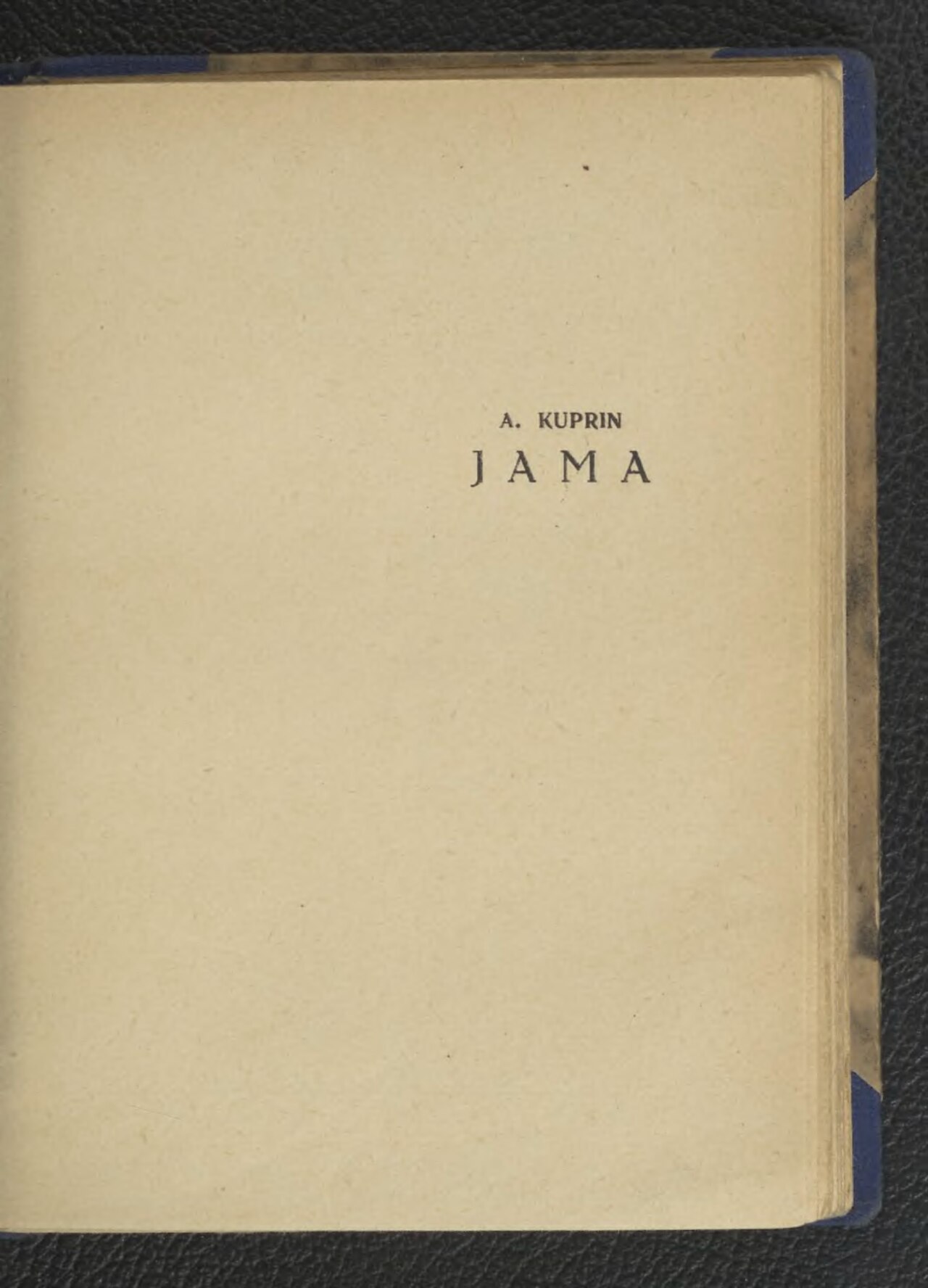
Kuprin's literary output spans a remarkable range of subjects and forms. His debut, 'The Last Debut' (1889), drew on the real 1881 stage suicide of singer Yevlalya Kadmina, a scandal that had also inspired Turgenev. After a three-year silence, 'Psyche' (1892) reappeared, probing the fragile boundary between fantasy and derangement. His first major work, Moloch (1896), offered a searing critique of Russia's surging capitalism and industrial unrest — a theme he would only briefly revisit in two later pieces. The collection Miniatures (1897) earned high praise from Leo Tolstoy, particularly for the circus story 'Allez!' His army-themed cycle reached its apex in The Duel (1905), while Yama: The Pit (1915) and The Garnet Bracelet (1911) — the latter adapted into a 1965 film — cemented his reputation. Other notable works include Olesya (1898), 'Captain Ribnikov' (1906), and 'Emerald' (1907). Kuprin died on 25 August 1938.
Gallery
Frequently Asked Questions
Who is Aleksandr I. Kuprin?
Aleksandr Ivanovich Kuprin (1870–1938) was a Russian novelist and short-story writer whose fiction frequently drew on his own experiences in the military and in various civilian trades. He is best remembered for blending vivid social observation with tightly plotted narratives.
What are Kuprin's most well-known works?
His major novels include The Duel and Yama: The Pit, while his short stories Moloch, Olesya, and The Garnet Bracelet are among the most widely anthologized pieces in Russian literature.
What themes run through Kuprin's fiction?
Kuprin consistently explored the inner lives of ordinary people—soldiers, workers, and outsiders—set against the rigid hierarchies of late-imperial Russian society. His military background gave his portrayals of army life a distinctive authenticity.
When was Kuprin born and when did he die?
He was born on 7 September 1870 (26 August by the old style) and died on 25 August 1938, living through the collapse of the Tsarist regime, the Revolution, and early Soviet rule.
Why is Kuprin considered important in Russian literary history?
He occupies a bridge position between the 19th-century realist tradition and early 20th-century modernism, offering psychological depth in relatively compact forms. His stories remain standard reading in Russian schools and continue to be translated into many languages.
More in Russian And Soviet Writers 1-22
Spotted an error? Know more?
This is a living reference — every entry is fact-audited, and reader corrections feed straight into our audit queue. Suggest an edit · See this site's audit record