
Boris Pasternak
Russian poet, novelist, and translator of Doctor Zhivago.

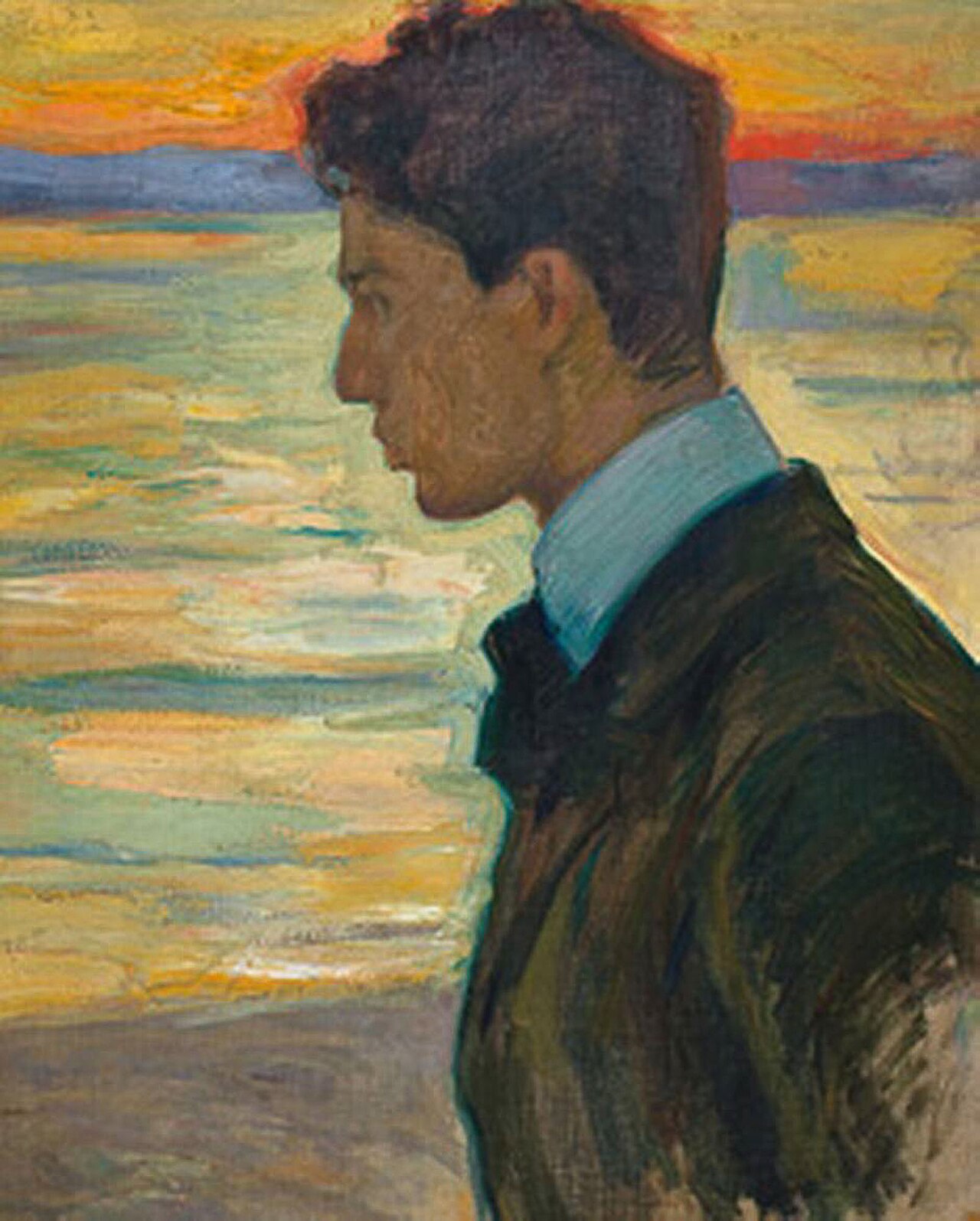
L.Pasternak · Public domain
Boris Leonidovich Pasternak was a Russian and Soviet poet, novelist, and translator, born in Moscow on 10 February 1890 to a wealthy, assimilated Jewish family. His father, Leonid Pasternak, was a post-Impressionist painter and professor at the Moscow School of Painting, Sculpture, and Architecture; his mother, Rosa Kaufman, was a concert pianist. The family claimed descent from the 15th-century Sephardic philosopher Isaac Abarbanel. Pasternak’s first poetry collection, *My Sister, Life*, was written in 1917 and published in Berlin in 1922, quickly becoming a major work in Russian literature. He also gained lasting popularity in Russia for his translations of plays by Goethe, Schiller, Calderón de la Barca, and Shakespeare.
Pasternak’s most famous work is *Doctor Zhivago*, a novel set between the 1905 Russian Revolution and World War II. Soviet authorities rejected it for publication, so the manuscript was smuggled to Italy and first published there in 1957 as part of a CIA effort to undermine the USSR. In 1958, Pasternak won the Nobel Prize in Literature, but the Communist Party forced him to decline it. His son Yevgeny accepted the prize on his behalf in 1989. Since 2003, *Doctor Zhivago* has been part of the standard Russian school curriculum.
As a child, Pasternak was baptized by his nanny, though the family’s Jewish background made this a half-secret, intimate matter. His parents had joined the Tolstoyan Movement shortly after his birth, and novelist Leo Tolstoy was a close family friend. Pasternak recalled his father illustrating Tolstoy’s *Resurrection*, with train conductors collecting the drawings to meet deadlines. In November 1910, when Tolstoy died, Leonid Pasternak took Boris to Astapovo to sketch Tolstoy on his deathbed. The Pasternak home also hosted Sergei Rachmaninoff, Alexander Scriabin, Lev Shestov, and Rainer Maria Rilke.
Initially aspiring to be a musician, Pasternak studied briefly at the Moscow Conservatory under Scriabin’s influence. In 1910, he left for the University of Marburg in Germany, studying under neo-Kantian philosophers Hermann Cohen, Nicolai Hartmann, and Paul Natorp. From 1904 to 1907, he was a cloister-mate of Peter Minchakievich at the Holy Dormition Pochayev Lavra in Ukraine. Despite confusion, neither attended a military academy; their monastery’s cadet uniforms resembled those of a military school. They parted in
- born
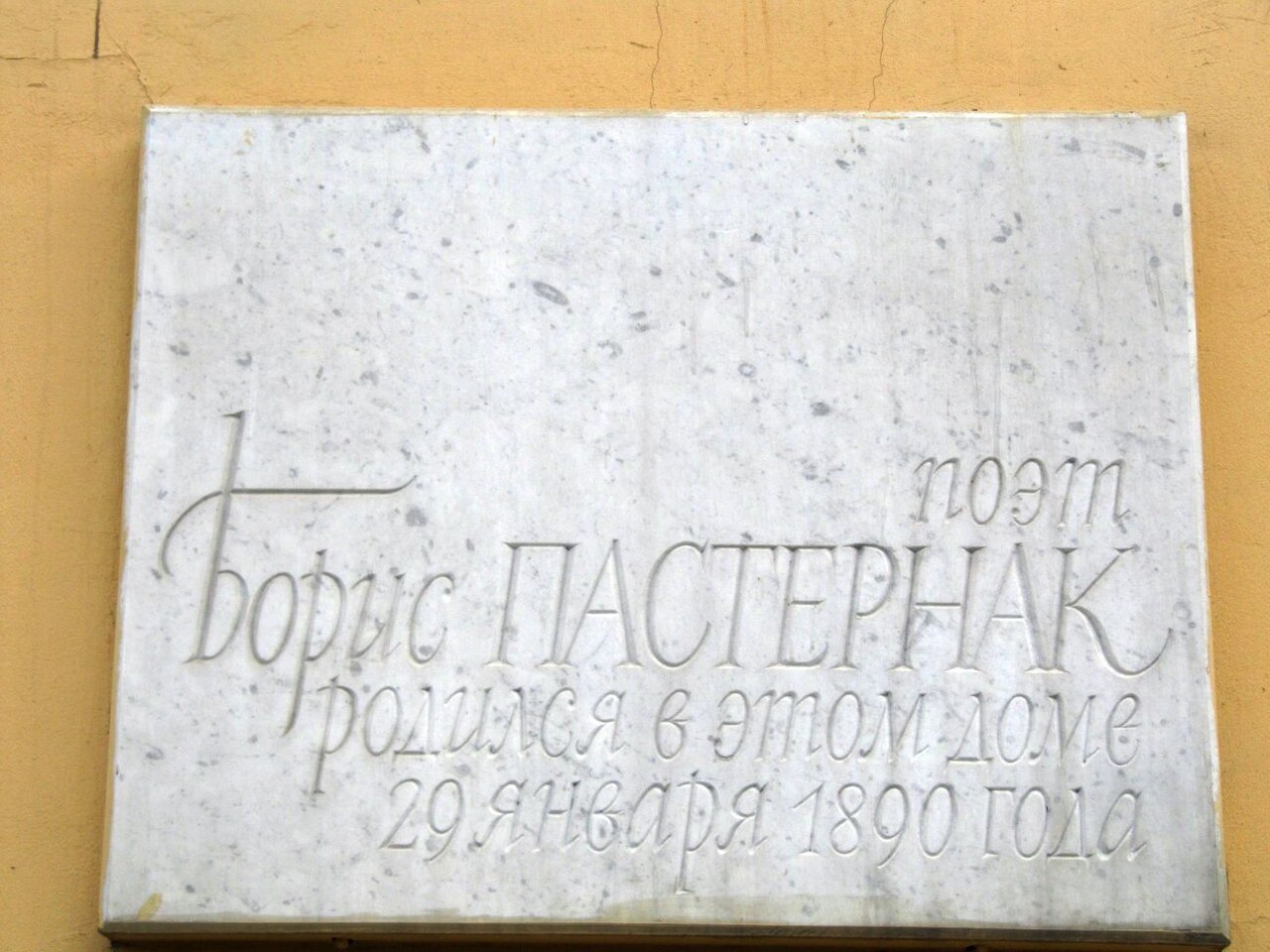
- 10 February [O.S. 29 January] 1890, Moscow
- died
- 30 May 1960
- field
- Poetry, novel, literary translation
- nationality
- Russian and Soviet
- known_for
- Doctor Zhivago, Nobel Prize in Literature (declined)
Lore & Background
Pasternak was born in Moscow into a wealthy, assimilated Jewish family. His father was the post-Impressionist painter Leonid Pasternak, and his mother was concert pianist Rosa Kaufman. The family claimed descent from Isaac Abarbanel. Novelist Leo Tolstoy was a close family friend, and Pasternak's parents had joined the Tolstoyan Movement shortly after his birth. Pasternak was baptized as a child by his nanny, but this was kept half-secret due to restrictions on Jews. He studied music at the Moscow Conservatory and later philosophy at the University of Marburg in Germany under neo-Kantian philosophers. His first book of poems, My Sister, Life, composed in 1917, was published in Berlin in 1922 and became an important collection in the Russian language. Pasternak's translations of stage plays by Goethe, Schiller, Calderón de la Barca, and Shakespeare remain popular with Russian audiences.
Reader's Guide
Pasternak's significance rests primarily on his novel Doctor Zhivago, which takes place between the Russian Revolution of 1905 and the Second World War. Rejected for publication in the USSR, the manuscript was smuggled to Italy and first published there in 1957 as part of a CIA operation to undermine the Soviet Union. The novel has been part of the main Russian school curriculum since 2003. Pasternak was awarded the 1958 Nobel Prize in Literature, an event that enraged the Communist Party of the Soviet Union, which forced him to decline the prize. In 1989, his son Yevgeny finally accepted the award on his father's behalf. His early poetry, especially My Sister, Life, established him as a major Russian poet. His translations of classic European playwrights also remain widely performed in Russia. The character Strelnikov in Doctor Zhivago is based on his boyhood friend Peter Minchakievich.
Did You Know?
- Pasternak's first book of poems, My Sister, Life, was composed in 1917 but published in Berlin in 1922.
- Doctor Zhivago was first published in Italy in 1957 as part of a CIA operation.
- Pasternak was forced by the Communist Party to decline the 1958 Nobel Prize in Literature.
- The character Strelnikov in Doctor Zhivago is based on Pasternak's boyhood friend Peter Minchakievich.
A House of Art and Conscience
Boris Pasternak entered the world in Moscow in February 1890, the son of Leonid, a post-Impressionist painter who held a professorship at the Moscow School of Painting, Sculpture, and Architecture, and Rosa Kaufman, a concert pianist whose own father had made his fortune in Odessa's industrial world. The family, assimilated Jews who traced their paternal line back to the fifteenth-century Sephardic philosopher Isaac Abarbanel, moved in circles that blended high art with deep moral conviction. Leo Tolstoy was a close friend of the household; Leonid had illustrated the serialized novel Resurrection, and when the great writer died at a stationmaster's house in Astapovo in 1910, the father rushed there with young Boris in tow and sketched the dying man's face. The home regularly hosted Rachmaninoff, Scriabin, Shestov, and Rilke. Pasternak first dreamed of becoming a musician, studied briefly at the Moscow Conservatory, then abandoned that path for philosophy at the University of Marburg, where he sat in the seminars of neo-Kantian thinkers.
Poet, Translator, and the Berlin Debut
Pasternak's literary voice first reached a wide audience through My Sister, Life, a collection of poems he composed in the turbulent year of 1917. Because the Soviet publishing landscape of the early 1920s made domestic release difficult, the volume appeared instead in Berlin in 1922, and it quickly established itself as a landmark of Russian-language poetry. Yet the poet was equally at home in the work of others. His renderings of stage plays by Goethe, Schiller, Calderón de la Barca, and Shakespeare became fixtures of the Russian theatrical and reading world, and they continue to be performed and read by audiences well into the twenty-first century. In this dual capacity—as an original voice shaping new verse and as a craftsman giving Russian readers access to the great Western dramatic canon—Pasternak occupied a singular position in Soviet letters, a role that would only become more consequential when he turned his considerable gifts toward the novel.
The Zhivago Affair and Cold War Politics
The novel that would define Pasternak's legacy, Doctor Zhivago, is set against the sweep of Russian history from the 1905 Revolution through the Second World War. When the Soviet authorities refused to grant it a publishing license, the manuscript found an extraordinary route to the outside world: it was smuggled across the border and carried to Italy, where it saw print in 1957. The circumstances of that publication were far from innocent literary commerce. The Italian edition was, in fact, part of a deliberate CIA operation designed to undermine the Soviet Union in the eyes of its own citizens, a fact that cast a long shadow over the book's reception. For a writer who had spent decades inside the Soviet system, the irony was bitter—his most personal work became a weapon in a Cold War information campaign, and the very success that made him internationally famous would simultaneously make him a target at home.
The Prize He Could Not Accept
In 1958 the Swedish Academy awarded Pasternak the Nobel Prize in Literature, a decision that sent shock waves through the halls of the Communist Party of the Soviet Union. The Party's reaction was swift and punitive: Pasternak was subjected to intense pressure and ultimately compelled to publicly renounce the honor, a humiliation that haunted him until his death in May 1960. The episode became one of the most cited examples of state censorship silencing a writer in the twentieth century. Decades later, in 1989, his son Yevgeny traveled to Stockholm and formally accepted the prize on his father's behalf, a gesture that carried the weight of a long-overdue correction. Meanwhile, the novel that had sparked the entire storm has since been rehabilitated in the very country that once banned it; Doctor Zhivago has been a required text in the main Russian school curriculum since 2003, ensuring that new generations of students encounter the story that cost its author so dearly.
Gallery
Frequently Asked Questions
Who is Boris Pasternak?
Boris Pasternak was a Russian and Soviet literary figure who worked across poetry, novels, and translation. Born in Moscow in 1890, he is best remembered worldwide for his novel Doctor Zhivago.
What is Doctor Zhivago?
Doctor Zhivago is Pasternak's most celebrated novel and the work that secured his place in world literature. It is the title piece that defines his legacy far beyond the Soviet readership.
Why did Pasternak refuse the Nobel Prize?
Pasternak was awarded the Nobel Prize in Literature but chose to decline it, a decision that became one of the most famous controversies in Soviet cultural history.
What was Pasternak's family background?
He grew up in a well-off, culturally prominent Jewish family in Moscow; his father was a post-Impressionist painter and art professor, while his mother was a concert pianist. The family traced their lineage back to the 15th-century Sephardic thinker Isaac Abarbanel.
When and how did Pasternak die?
Boris Pasternak passed away on 30 May 1960, bringing an end to a career that spanned nearly four decades of Russian and Soviet letters.
More in Russian And Soviet Writers 1-22
Spotted an error? Know more?
This is a living reference — every entry is fact-audited, and reader corrections feed straight into our audit queue. Suggest an edit · See this site's audit record