
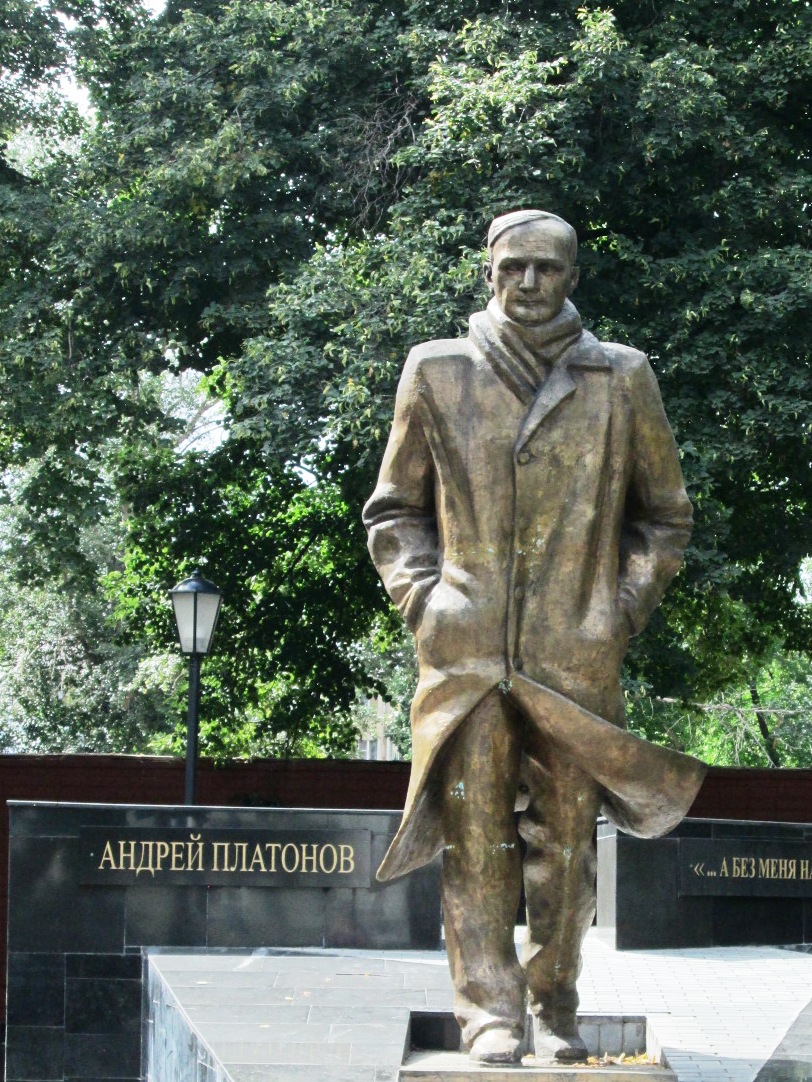
Andrei Platonov
Soviet writer whose major works were banned for decades.

Unknown author · Public domain
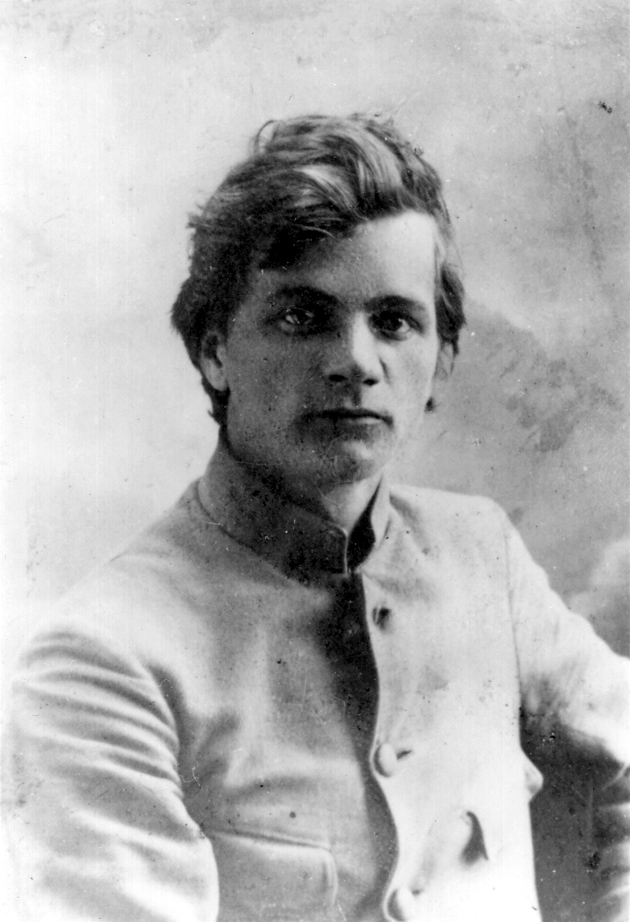
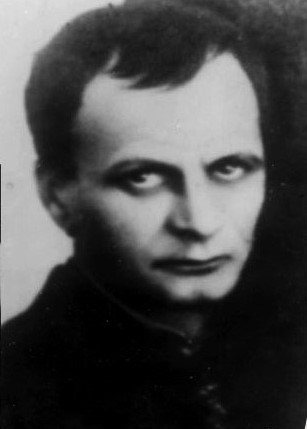
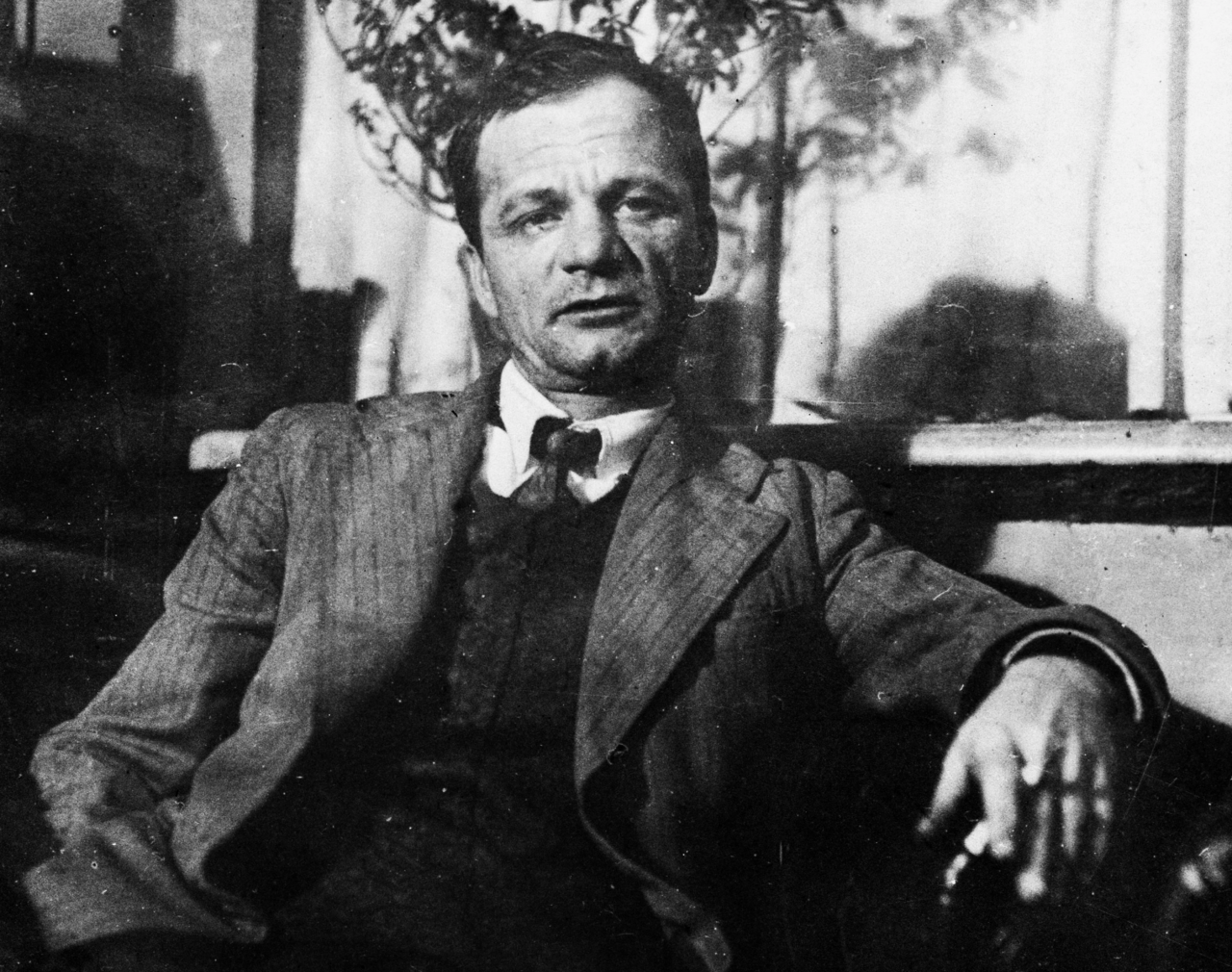
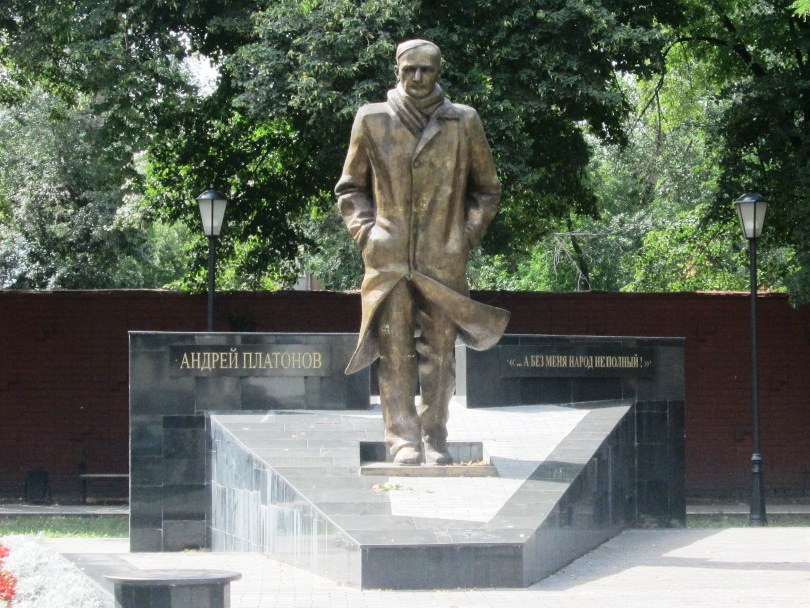
Andrei Platonovich Platonov was a Soviet Russian novelist, short story writer, philosopher, playwright, and poet. Although he regarded himself as a communist, his principal works were banned until thirty years after his death due to their skeptical attitude toward collectivization and other Stalinist policies, as well as their experimental, avant-garde form infused with existentialism.
- born
- 28 August [O.S. 16 August] 1899
- died
- 5 January 1951
- field
- Literature
- nationality
- Soviet Russian
- known_for
- Novels The Foundation Pit, Soul, and Chevengur
Lore & Background
Platonov was born in the settlement of Yamskaya Sloboda on the outskirts of Voronezh. His father was a metal fitter and amateur inventor, his mother the daughter of a watchmaker. He began work at age thirteen, holding jobs as an office clerk, smelter, assistant machinist, warehouseman, and railroad worker. After the 1917 Revolution, he studied electrical technology at Voronezh Polytechnic Institute. During the Civil War, he assisted his father on trains delivering troops and supplies.
Reader's Guide
Platonov's significance lies in his major novels—Chevengur, The Foundation Pit, and Soul—which were suppressed in his lifetime for their implicit criticism of Stalinist policies and their avant-garde style. His novella For Future Use, chronicling forced collectivization, led Stalin to call him 'an agent of our enemies.' Despite official censure, Platonov continued writing, publishing eight more books between 1937 and his death in 1951. His works were only published in the USSR during the late 1980s, and his complete, uncensored novella Soul appeared only in 1999. Platonov's legacy is that of a communist writer whose experimental, existentialist voice challenged the dominant socialist realism doctrine.
Did You Know?
- Platonov adopted the pen-name Platonov in 1920.
- He was expelled from the Communist Party in 1921 as an 'unstable element.'
- Stalin wrote marginal comments on Platonov's story For Future Use, calling the author a 'fool, idiot, scoundrel.'
- His novella Soul, about a nomadic nation called Dzhan, was first published in a censored version in 1966.
Roots in the Industrial Periphery
Born in the small settlement of Yamskaya Sloboda on the outskirts of Voronezh, in the black-earth region of central Russia, Platonov grew up immersed in the rhythms of manual industry. His father worked as a metal fitter and amateur inventor in the local railroad workshops, while his mother was the daughter of a watchmaker. After completing primary education at a four-year city school, he entered the workforce at just thirteen, rotating through positions as an office clerk at an insurance company, a smelter at a pipe factory, an assistant machinist, a warehouseman, and a railroad hand. The 1917 Revolution briefly opened the door to formal study in electrical technology at Voronezh Polytechnic Institute, but the outbreak of the Civil War in 1918 yanked him back onto the rails, where he assisted his father in delivering troops and supplies and clearing snow from tracks. These years of physical, technical labor left a permanent imprint on his sensibility, shaping a writer whose prose would always attend to the texture of work and material process.
A Prolific Outburst and Political Turbulence
Between 1918 and 1921, Platonov entered a ferocious creative phase. He published dozens of poems, several stories, and hundreds of articles and essays across an astonishing range—literature, philosophy, religion, economics, technology, foreign relations, and the civil war. It was not uncommon to see two or three of his pieces on unrelated subjects appear in the press on the same day. He adopted the pen name Platonov in 1920, joined the Union of Communist Journalists, edited local party newspapers, and was elected to the board of the Voronezh Union of Proletarian Writers. Yet his political path was turbulent: admitted to the Communist Party as a candidate in July 1920, he was expelled in October 1921 as an "unstable element." He had openly criticized local communists' privileges during the 1921 famine, and he may have quit in dismay over the New Economic Policy. Three subsequent re-admission applications were all denied.
The Novels That Could Not Be Printed
Returning to prose in 1926, Platonov produced what critics immediately recognized as a major, original literary voice. His two great novels, Chevengur (1928) and The Foundation Pit (1930), carried an implicit critique of the Soviet system and an experimental, existentialist form that clashed with the emerging doctrine of socialist realism. Neither was accepted for publication in the USSR at the time; a single section of Chevengur appeared in a magazine, and both novels waited until the late 1980s for Soviet publication—roughly thirty years after his death in 1951. The suppression was not merely bureaucratic. Archival evidence reveals that Stalin personally read the 1931 novella For Future Use, scrawling marginal insults about the author and calling his style "incomprehensible nonsense." In a note to the publishers, he labeled Platonov "an agent of our enemies" and suggested punishing the author and editors in a way that would serve them "for future use."
The Engineer's Interlude and Philosophical Circle
In 1922, in the aftermath of the devastating 1921 drought and famine, Platonov abandoned literature entirely, explaining later that he simply could not continue with what he considered a contemplative pursuit like writing. He took up engineering and administrative work for the Voronezh Provincial Land Administration and later the central government, organizing the digging of ponds and wells, draining swampland, and building a hydroelectric plant. This hands-on period in electrification and land reclamation lasted several years before he returned to writing in 1926 and moved to Moscow as a professional writer. In the 1930s he cultivated intellectual connections with the philosopher Mikhail Lifshitz, editor of The Literary Critic, and with the Hungarian theoretician György Lukács, both contributors to that Moscow magazine. These philosophical relationships deepened the theoretical underpinnings of his fiction and placed him within a broader Marxist intellectual conversation, even as his own work grew increasingly at odds with the official literary line.
Gallery

Frequently Asked Questions
Who is Andrei Platonov?
Andrei Platonov was a Soviet Russian writer who produced novels, short stories, plays, poetry, and philosophical essays. He is best remembered for his three major novels: The Foundation Pit, Soul, and Chevengur.
Why were Platonov's major works banned for decades?
His principal novels were suppressed because they cast a skeptical eye on collectivization and other Stalinist policies, and their experimental, avant-garde form with existentialist undertones clashed with official cultural expectations. The bans persisted until roughly thirty years after his death in 1951.
What made Platonov's writing style distinctive?
His prose fused experimental, avant-garde structure with deeply existentialist questioning, setting him apart from the Socialist Realism that dominated Soviet letters. Readers often describe his language as dreamlike and philosophical compared to his contemporaries.
When was Andrei Platonov born and when did he die?
He was born on 28 August 1899 (Old Style 16 August) and died on 5 January 1951. His adult life spanned the revolutionary upheaval through the height of Stalin's rule.
What is Platonov's significance in Soviet literary history?
He is regarded as one of the most important yet most suppressed voices of Soviet literature, a self-described communist whose art consistently interrogated the very system he served. His posthumous rehabilitation and growing global recognition in the late twentieth century cemented his reputation as a major philosophical novelist.
More in Russian And Soviet Writers 1-22
Spotted an error? Know more?
This is a living reference — every entry is fact-audited, and reader corrections feed straight into our audit queue. Suggest an edit · See this site's audit record