
Andrei Bely
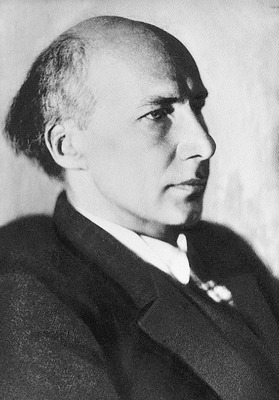
Russian Symbolist novelist and poet, author of *Petersburg*.

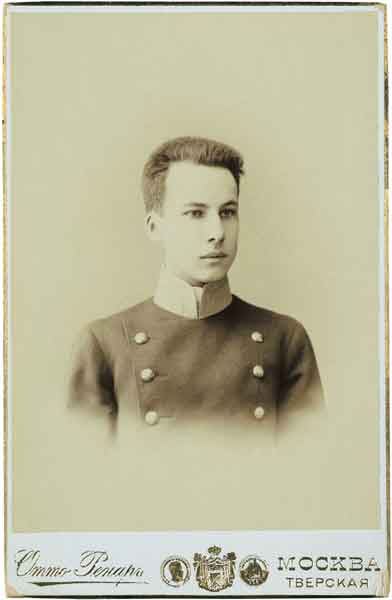
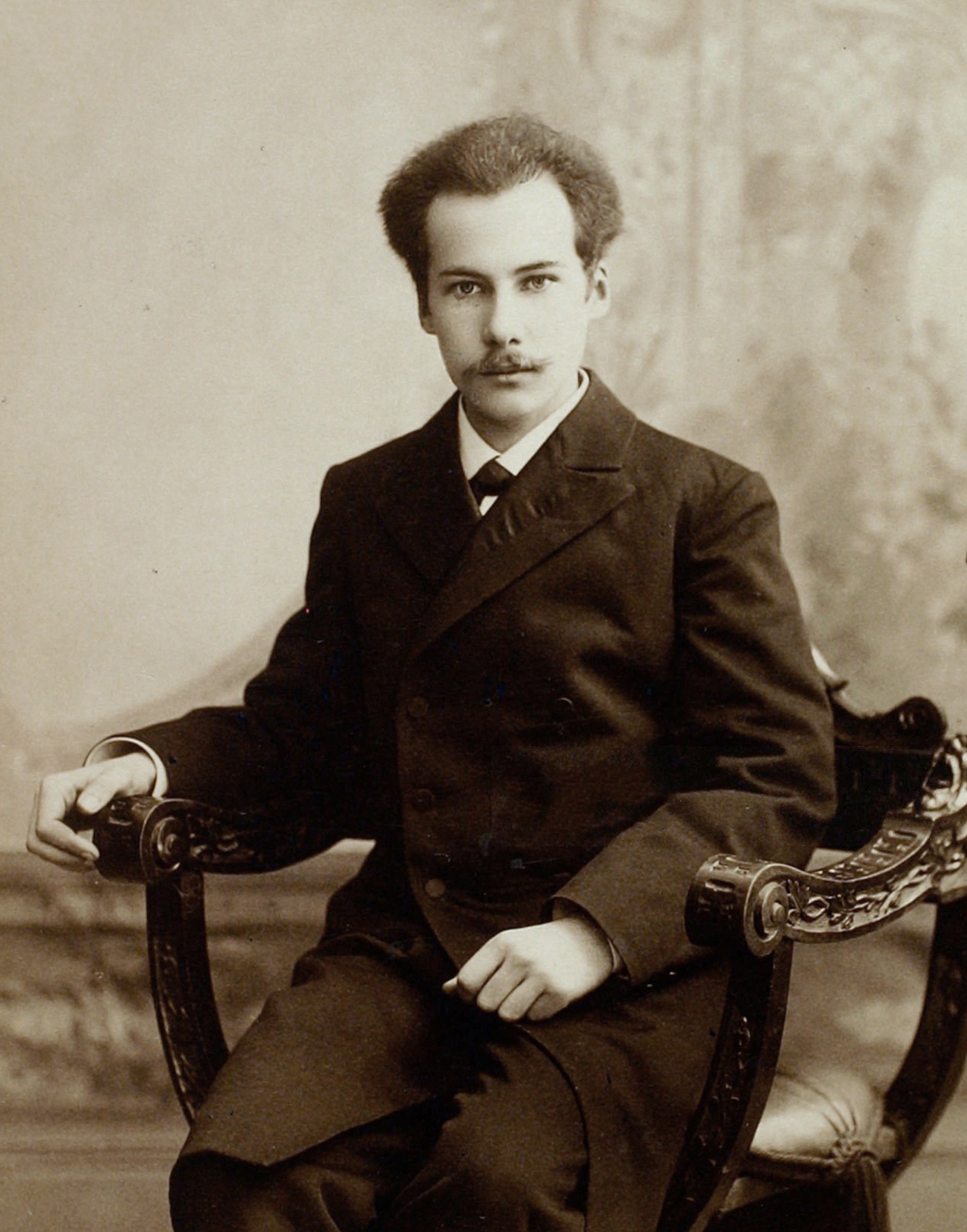
Otto Renard · Public domain
Andrei Bely was the pen name of Boris Nikolaevich Bugaev, a Russian and Soviet novelist, Symbolist poet, theorist, and literary critic. He was a committed anthroposophist and follower of Rudolf Steiner, and his novel *Petersburg* (1913/1922) was regarded by Vladimir Nabokov as the third-greatest masterpiece of modernist literature. The Andrei Bely Prize, one of the most important prizes in Russian literature, was named after him.
- born
- 26 October [O.S. 14 October] 1880
- died
- 8 January 1934
- field
- Novelist, poet, theorist, literary critic
- nationality
- Russian and Soviet
- known_for
- Novel *Petersburg*, Symbolist poetry, anthroposophy, influence on modernist literature
Lore & Background
Boris Bugaev was born in Moscow into a prominent intellectual family. His father, Nikolai Bugaev, was a noted mathematician and founder of the Moscow school of mathematics; his mother, Aleksandra Dmitrievna, was a society beauty and pianist who gave him his musical education. Young Boris grew up at the Arbat and was a polymath interested in mathematics, biology, chemistry, music, philosophy, and literature. He attended the University of Moscow and took part in the Symbolist movement and the Russian school of neo-Kantianism. He became friendly with Alexander Blok and his wife, falling in love with her, which caused tensions between the two poets. Bugaev was invited but unable to attend their wedding due to his father's death. The philosopher Mikhail Solovyov gave Bugaev his pseudonym Andrei Bely.
In his later years Bely was influenced by Rudolf Steiner's anthroposophy and became a personal friend of Steiner. He attempted to connect Vladimir Solovyov's philosophical ideas with Steiner's Spiritual Science, developing notions such as the Eternal Feminine, which he equated with the 'world soul' and the 'supra-individual ego.' He spent time between Switzerland, Germany, and Russia during its revolution, supported the Bolshevik rise to power, and later served on the Organizational Committee of the Union of Soviet Writers. He died aged 53 in Moscow. His literary career began with *The Symphonies*, a cycle of experimental prose works (1900–1908). His first novel, *The Silver Dove* (1909), is notable for its skaz techniques and ornamental prose. His masterpiece *Petersburg* (1913/1922) employs a prose method where sounds evoke colors, set during the 1905 revolution; its plot involves Nikolai Apollonovich, assigned to assassinate his own father. After the Revolution, Bely wrote psychological autobiographical novels influenced by anthroposophy, including *Kotik Letaev* (1918) and *The Christened Chinaman* (1921). His last novel, *Moscow* (1926–1932), depicts the Russian intelligentsia during World War I and the Revolution.
Reader's Guide
Andrei Bely's significance lies in his transformative role in Russian prose and his influence on early Soviet writers such as Zamyatin, Pilnyak, Babel, and Andrei Platonov. His novels prefigure the sensibility and structural devices of later Western modernist works, including Joyce's *Ulysses*, Robbe-Grillet's *Jealousy*, and Pynchon's *Gravity's Rainbow*, despite no direct influence. Bely's essay 'Rhythm as Dialectic in The Bronze Horseman' was cited in Nabokov's novel *The Gift*, and Nabokov's 'Notes on Prosody' largely follows Bely's essay 'Description of the Russian Iambic Tetrameter.' The Andrei Bely Prize, named after him, remains one of the most important prizes in Russian literature. His legacy includes his experimental prose, his integration of anthroposophical ideas, and his impact on the development of modernist narrative techniques.
Did You Know?
- Vladimir Nabokov regarded Bely's novel *Petersburg* as the third-greatest masterpiece of modernist literature.
- Bely's father, Nikolai Bugaev, was a noted mathematician and founder of the Moscow school of mathematics.
- Bely's poems were set to music and performed by Russian singer-songwriters.
- The philosopher Mikhail Solovyov gave Bugaev his pseudonym Andrei Bely.
Intellectual Roots and the Birth of a Pseudonym
Boris Nikolaevich Bugaev entered the world in Moscow in 1880 into a household where intellectual ferment was the norm. His father, Nikolai Bugaev, was a mathematician credited as a founder of the Moscow school of mathematics, while his mother Aleksandra was both a celebrated society beauty and a skilled pianist who gave young Boris his earliest musical training. Growing up on the Arbat, the boy displayed a restless polymathic curiosity spanning mathematics, biology, chemistry, music, philosophy, and literature. At the University of Moscow he engaged with both the Symbolist movement and the Russian neo-Kantian school. A defining personal encounter came through the Solovyov family; Mikhail Solovyov, younger brother of the philosopher Vladimir, became a close friend and, notably, bestowed upon Bugaev the pen name Andrei Bely. Boris's long autobiographical poem The First Encounter (1921) memorializes this relationship, its title deliberately echoing Vladimir Solovyov's Three Encounters. The young poet also fell in love with Alexander Blok's wife, a passion that generated lasting tension between the two men, and he was ultimately unable to attend their wedding because of his father's death.
Petersburg: A Modernist Landmark
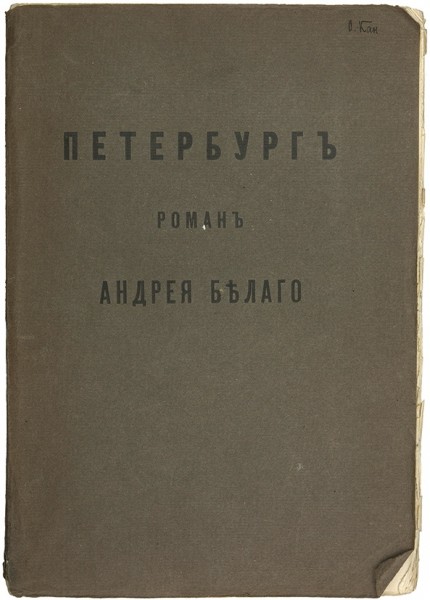
Published in 1913 and revised in 1922, Petersburg stands as Bely's most celebrated achievement and the second installment of his unfinished trilogy East or West. Set against the feverish backdrop of turn-of-the-century Petersburg and the 1905 Revolution, the novel follows Nikolai Apollonovich, a hapless young man swept into revolutionary conspiracies and ultimately tasked with assassinating his own father, a government official. Bely's prose is distinguished by a striking synesthetic technique in which sounds evoke colors, and one of its most haunting images involves Nikolai being pursued through the city's mists by the phantom clatter of hooves from the bronze statue of Peter the Great. Vladimir Nabokov ranked the work as the third-greatest masterpiece of modernist literature. Scholars have also noted possible resonances with Freudian psychoanalytic methods in Bely's interpretive approach to character and narrative. The novel's structural innovations and sensibility prefigure later Western modernist works, from Joyce's Ulysses to Pynchon's Gravity's Rainbow, creating a phantom familiarity for readers who encounter those texts for the first time.
Anthroposophy and the Post-Revolutionary Novels
In his later creative period, Bely's thinking was profoundly shaped by Rudolf Steiner's anthroposophy, with whom he became a personal friend. Bely sought to weave together the philosophical legacy of Vladimir Solovyov with Steiner's Spiritual Science, developing concepts such as the Eternal Feminine, which he identified with the "world soul" and the "supra-individual ego"—a shared ego transcending individual boundaries. This philosophical orientation permeates his two post-Revolution psychological autobiographical novels: Kotik Letaev (1918) and The Christened Chinaman (1921). The critic D. S. Mirsky praised Kotik Letaev as Bely's most unique and original work, while describing The Christened Chinaman as his most realistic and amusing. Bely also produced poetry during this era, including Christ is Risen (1918), which celebrated the Revolution, and Glossolalia (1917). He supported the Bolshevik rise to power and dedicated his later efforts to Soviet cultural life, serving on the Organizational Committee of the Union of Soviet Writers while splitting his time among Switzerland, Germany, and Russia.
Legacy, Influence, and the Unfinished Moscow
Bely's impact on Russian and world literature extends far beyond his own lifetime. The Andrei Bely Prize, one of the most prestigious awards in Russian letters, bears his name, and his poems have been set to music and performed by Russian singer-songwriters. His influence on the next generation of Soviet writers—Zamyatin, Pilnyak, Babel, and Andrei Platonov—is widely acknowledged, and his novels prefigure the structural devices and sensibility of later Western modernists with such thoroughness that readers of Joyce, Robbe-Grillet, or Pynchon may feel a phantom familiarity, even though those authors almost certainly never encountered his work. His final novel, Moscow (1926–1932), attempted to portray the Russian intelligentsia through World War I and the Revolution, featuring complex characters undergoing personality transformation and continuing his linguistic experiments. Only the first part, The Moscow Eccentric, has been translated into English (2016). Bely died in Moscow in January 1934 at age 53, prompting numerous commemorative poems from fellow writers.
Gallery
Frequently Asked Questions
Who is Andrei Bely?
Andrei Bely was a Russian and Soviet novelist, Symbolist poet, literary theorist, and critic active in the early twentieth century. He is best remembered for his modernist novel *Petersburg* and for his influential work as a literary critic and essayist.
What was Andrei Bely's real name?
The pen name 'Andrei Bely' belonged to Boris Nikolaevich Bugaev, born in 1880 and died in 1934. He published under the pseudonym for his entire literary career, and it is the name by which he is universally known.
What is Andrei Bely's most famous novel?
His novel *Petersburg*, first released in 1913 and revised in 1922, is considered a landmark of Russian modernism. Vladimir Nabokov famously placed it among the very greatest achievements of modernist literature worldwide.
What philosophical beliefs shaped Andrei Bely's work?
Bely was a committed anthroposophist and a devoted follower of the philosopher Rudolf Steiner. This esoteric spiritual framework deeply informed both his theoretical writings and his literary imagination, distinguishing him from many of his Symbolist peers.
What is the Andrei Bely Prize?
The Andrei Bely Prize is one of the most prestigious literary awards in Russia, established to honor his legacy. It recognizes outstanding contributions to Russian-language literature and is widely regarded as a top-tier honor in the country's literary world.
More in Russian And Soviet Writers 1-22
Spotted an error? Know more?
This is a living reference — every entry is fact-audited, and reader corrections feed straight into our audit queue. Suggest an edit · See this site's audit record