
Alexander Grin
Russian writer of romantic sea tales and fantasy.

DILIN · CC BY-SA 4.0
Alexander Grin was the pen name of Aleksandr Stepanovich Grinevsky, a Russian writer known for romantic novels and short stories set in an unnamed fantasy land often called Grinlandia. His works, dealing with the sea, adventures, and love, enjoyed significant popularity in the early 1920s but later fell out of favor with Soviet publishers.
- born
- 23 August 1880 (O.S. 11 August 1880)
- died
- 8 July 1932
- field
- Writer
- nationality
- Russian
- known_for
- Romantic novels and short stories set in Grinlandia
Lore & Background
Aleksandr Stepanovich Grinevsky was born in Slobodskoy, Vyatka Governorate, in 1880, the son of a Polish exile and a mother from a merchant family. After graduating school in Vyatka in 1896, he lived as a vagabond in Odessa, working as a sailor, gold miner, and construction worker, often begging or relying on money from his father. He joined the Russian army, became a member of the Socialist-Revolutionary Party, was arrested for revolutionary propaganda, and spent time in jail. He published his first short story in 1907 (a 1906 story was immediately banned and confiscated), was arrested again, and exiled to Tobolsk Governorate, from which he escaped. He was arrested again in 1910 and exiled to Arkhangelsk Governorate, where he lived with his first wife Vera Pavlovna Abramova from 1910 to 1912. He returned to Saint Petersburg in 1912 and divorced her in 1913. Most of his larger works were written after the 1917 October Revolution. In 1921 he married Nina Nikolaevna Mironova, and in 1924 they moved to Feodosiya to live near the sea.
Reader's Guide
Alexander Grin's significance lies in his creation of a distinct fictional world—Grinlandia—populated by sea captains, sailors, scientists, travelers, criminals, extravagant aristocrats, childlike girls, elegant villains, and strong-spirited heroes. His works, described by some critics as 'adolescent fiction,' bear no direct relation to Imperial or Soviet Russia, instead featuring Western European names and settings. Despite his popularity in the early 1920s, his romantic visions contrasted starkly with mainstream Soviet literature, leading to poverty and rejection by publishers in Moscow and Leningrad. His legacy includes notable novels such as Scarlet Sails (1923), The Shining World (1923), The Golden Chain (1925), She Who Runs on the Waves (1928), Jessie and Morgiana (1929), and The Road to Nowhere (1930). Several of his works were adapted into films, including the 1961 film Scarlet Sails during the Khrushchev Thaw, which revived interest in his writings. Filmmaker Andrei Tarkovsky cited Grin as an example of a poet with 'an awareness of the world, a particular way of relating to reality.'
Did You Know?
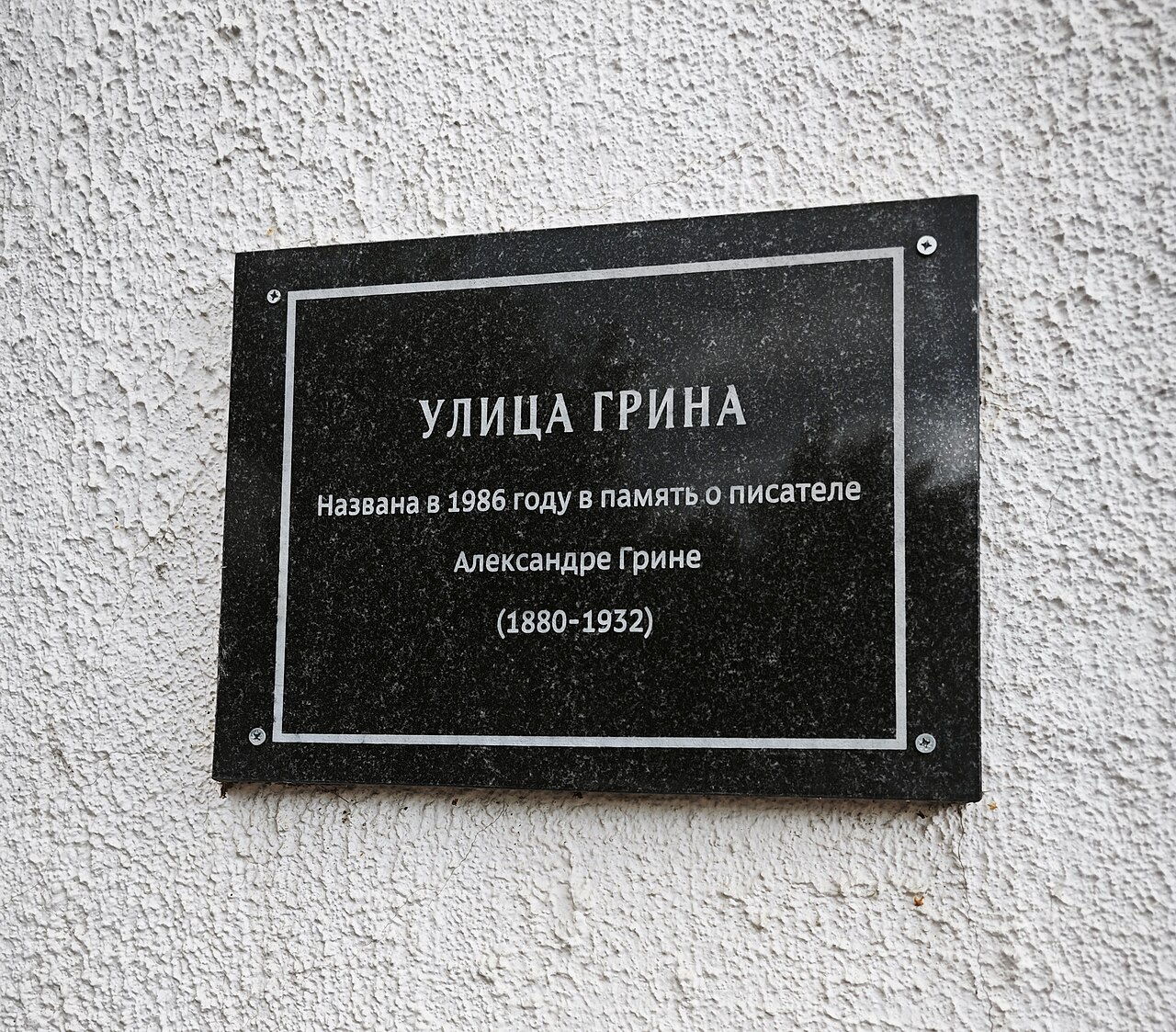
- His pen name 'Grin' is a de-Russified form of his real last name Grinevsky.
- He escaped from exile in Tobolsk Governorate and returned to Saint Petersburg to live illegally.
- He died of stomach cancer in 1932 in Stary Krym and was interred there.
- Filmmaker Andrei Tarkovsky described Grin going into the mountains with a homemade bow-and-arrow to hunt for food while dying of hunger.
A Restless Life Forged in Exile and Adventure
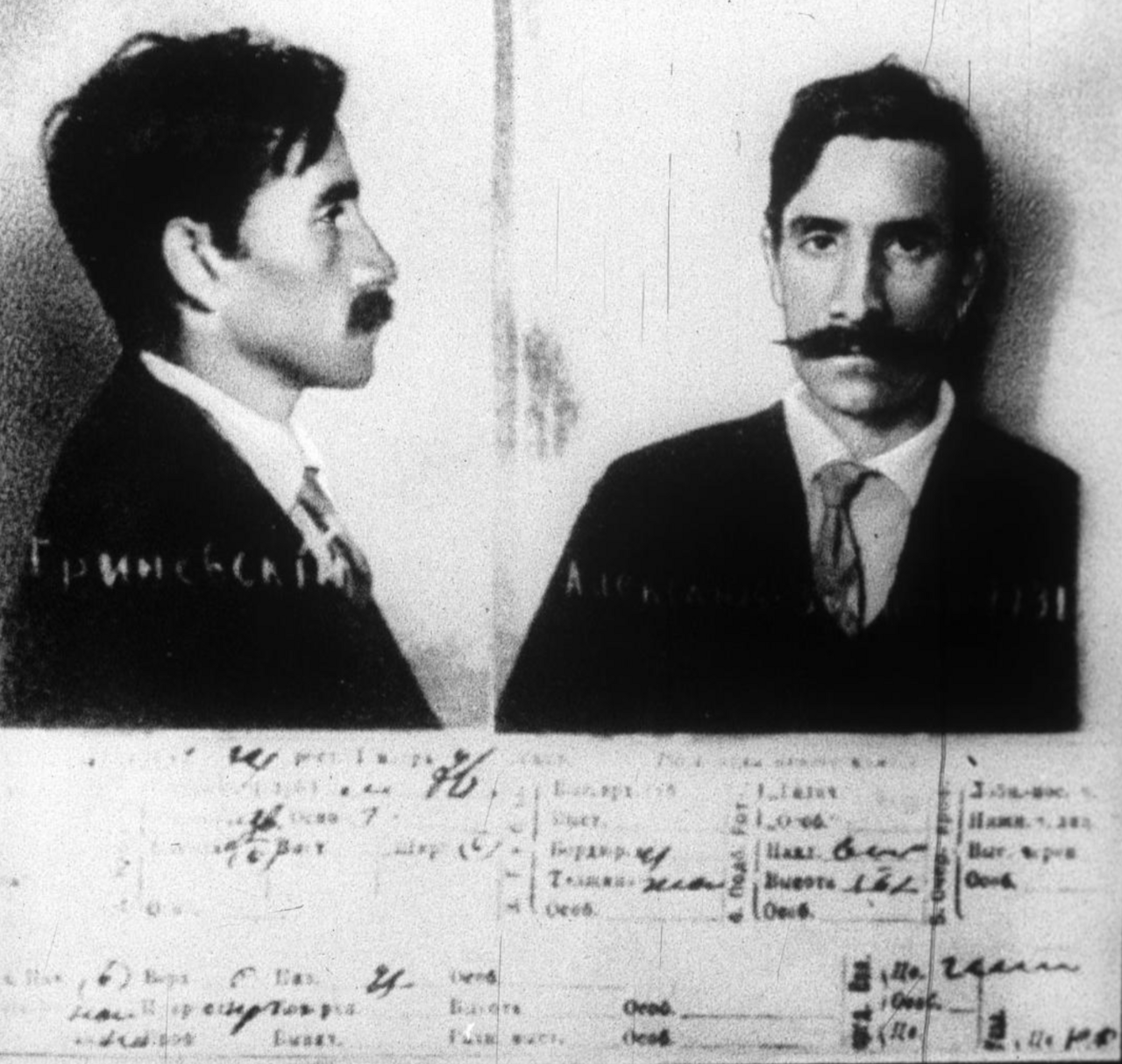
Born Aleksandr Stepanovich Grinevsky in 1880 in Slobodskoy, Vyatka Governorate, he was the son of a Polish father, Stefan Hryniewski, who had been exiled to Tula for his role in the 1863 January Uprising, and a Russian nurse, Anna Lyapkova. After finishing school in Vyatka in 1896, the young Aleksandr drifted to Odessa and embraced a nomadic existence. He took on work as a sailor, a gold miner, and a construction laborer, yet unemployment was a constant companion, and he frequently survived on begging and remittances from his father. His path intersected with politics when he enlisted in the Russian army and joined the Socialist-Revolutionary Party, leading to his arrest and imprisonment for revolutionary propaganda. In 1906, he was again seized in Saint Petersburg and sentenced to four years of exile in Tobolsk Governorate. True to his restless spirit, he escaped almost immediately upon arrival and slipped back to Petersburg, living illegally until his next arrest in 1910, which sent him to Arkhangelsk Governorate.
Grinlandia — A Sea-Bound Fantasy World
Grin's fiction inhabits a deliberately unnamed coastal land that feels simultaneously European and Latin American in character, a realm his devoted readers have affectionately christened Grinlandia. The characters who populate this world are uniformly Western European in name and appearance, even as the geography remains vague and dreamlike. His casts include sea captains, sailors, scientists, intrepid travelers, dashing criminals, extravagant aristocrats, childlike young women, and elegant villains, all orbiting around strong-spirited heroes who refuse to abandon their dreams. The sea, adventure, and love form the emotional and narrative bedrock of nearly every story. Magic appears not as a system but as a singular, transformative miracle that reshapes the lives of those who encounter it. Critics have sometimes dismissed these tales as adolescent fiction, yet the world is threaded with recognizably early-twentieth-century details—automobiles, banks—grounding its fantasy in a specific historical moment. Even his pen name, Grin, is a deliberately de-Russified shortening of his birth surname Grinevsky, reinforcing the sense of a self-constructed identity set apart from his native soil.
From Popularity to Soviet Marginalization
Grin's first short story appeared in a newspaper in 1906, but his major novels came after the 1917 October Revolution and captured a wide readership during the first half of the 1920s. Titles like Scarlet Sails (1923), The Shining World (1923), The Golden Chain (1925), and She Who Runs on the Waves (1928) defined this period of creative abundance. In 1921 he married Nina Nikolaevna Grin, and by 1924 the couple had relocated to Feodosiya, drawn by the proximity of the sea. Yet as the 1920s gave way to the 1930s, the political and aesthetic climate shifted decisively against him. His romantic visions clashed sharply with the demands of mainstream Soviet literature, and publishers in both Moscow and Leningrad turned his manuscripts down. Stripped of income, Grin and his wife sank into extreme poverty. Compounding their hardship, he battled alcoholism and tuberculosis, both of which steadily eroded his health. He died of stomach cancer in 1932 in Stary Krym and was buried in the local cemetery, a man whose most beloved stories had been rendered nearly unsellable in his own country.
Enduring Resonance Across Decades and Borders
Grin's posthumous life has been remarkably vibrant. During the Khrushchev Thaw, his works experienced a revival, culminating in Alexandr Ptushko's 1961 film adaptation of Scarlet Sails. Since then, his stories have been adapted repeatedly across borders: Otar Iosseliani's Watercolor (1958), Jan Schmidt's The Lanfier Colony (1969), Juraj Herz's Czechoslovak Morgiana (1972), Krsto Papić's The Rat Savior (1976), Bulat Mansurov's The Shining World (1984), Oleg Teptsov's Mister Designer (1988), Valery Pendrakovskiy's She Who Runs on the Waves (2007), and Pietro Marcello's Scarlet (2022). His influence also reaches into literary and philosophical circles. Filmmaker Andrei Tarkovsky, in Sculpting in Time, recalled how a starving Grin once ventured into the mountains with a homemade bow and arrow to hunt, and cited him as a poet in the deepest sense—a man whose relationship to reality constituted a guiding philosophy. A critical essay by Margarit Tadevosyan explores the connection between Vladimir Nabokov and Grin, while English translations, including Nicholas Luker's Selected Short Stories (1987) and Bryan Karetnyk's Fandango and Other Stories (2020), continue to introduce his world to new readers.
Gallery
Frequently Asked Questions
Who is Alexander Grin?
Alexander Grin was the pen name of Aleksandr Stepanovich Grinevsky, a Russian author (1880–1932) celebrated for lush, romantic novels and short stories centered on the sea, adventure, and passionate love. He is best known for building a dreamlike, unnamed tropical world that readers and critics affectionately call Grinlandia.
What is Grinlandia?
Grinlandia is the informal label fans and scholars use for the sun-soaked, exotic setting where the bulk of Grin's fiction unfolds. It features wild coastlines, mysterious characters, and a sense of boundless freedom that sets his work apart from the realistic traditions of Soviet literature.
Why did Alexander Grin fall out of favor with Soviet publishers?
After the early 1920s, the emerging socialist-realist establishment regarded his escapist romance and lack of class-conscious themes as ideologically unsuitable. By the late 1920s his manuscripts were repeatedly rejected, leaving him largely unpublished and in financial hardship until his death in 1932.
What is Alexander Grin's most famous work?
The 1924 novel *Goliath* (often translated as *The Blue Falcon*) is widely considered his masterpiece, following a young man's quest to find a legendary bird in the jungles of Grinlandia. It distills his signature mix of adventure, longing, and romantic idealism into a single sweeping narrative.
Was Alexander Grin a real person or a fictional character?
He was a real historical figure: Aleksandr Stepanovich Grinevsky, born on 23 August 1880 (Old Style 11 August) in the Russian Empire and died on 8 July 1932 in the Soviet Union. 'Alexander Grin' was simply his chosen literary pen name, not a character from his own stories.
More in Russian And Soviet Writers 1-22
Spotted an error? Know more?
This is a living reference — every entry is fact-audited, and reader corrections feed straight into our audit queue. Suggest an edit · See this site's audit record